
Purchasing a commercial RO (Reverse Osmosis) plant is a long-term investment that directly impacts water quality, operational efficiency, and overall business performance. Industries such as hospitality, healthcare, manufacturing, food processing, and educational institutions rely heavily on purified water for daily operations. With many commercial RO plant manufacturers available in the market, making the right choice can be challenging. Asking the right questions before buying helps ensure that the system meets your specific requirements and delivers reliable performance over time.
Below are the most important questions you should ask commercial RO plant manufacturers before finalizing your purchase.
1. Have You Analyzed My Raw Water Quality?
The performance of a commercial RO plant depends greatly on the quality of the incoming water. Different water sources contain varying levels of TDS, hardness, iron, silica, and microbial contaminants. Always ask whether the manufacturer conducts a detailed raw water analysis before designing the system. A manufacturer who designs the RO plant based on actual water parameters will ensure higher efficiency, longer membrane life, and consistent output quality.
2. Is the RO Plant Design Customized for My Application?
Every business has unique water usage needs. Ask the manufacturer if the RO plant is customized for your industry and application. For example, a hospital requires higher water purity than a hotel, while a manufacturing unit may need large volumes for process use. Customized system design ensures optimal performance, reduces wastage, and prevents under- or over-sizing of the plant.
3. What Is the Plant’s Capacity and Scalability?
Understanding the system’s capacity is critical for uninterrupted operations. Ask questions such as:
What is the output capacity in liters per hour or per day?
Can the system handle peak demand?
Is the RO plant scalable for future expansion?
A reliable manufacturer will assess both your current and future water needs and recommend a system that can grow with your business.
4. What Pre-Treatment Systems Are Included?
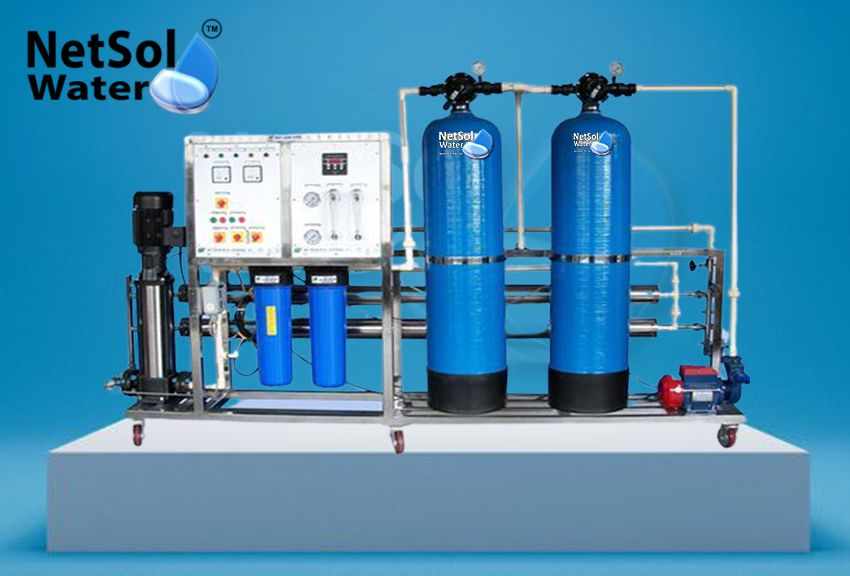
Pre-treatment plays a vital role in protecting RO membranes and ensuring long-term system performance. Ask commercial RO plant manufacturers what pre-treatment components are included, such as:
Multi-grade sand filters
Activated carbon filters
Water softeners or antiscalant dosing systems
Iron or turbidity removal units
Proper pre-treatment reduces fouling, lowers maintenance costs, and extends membrane life.
5. What Type and Brand of RO Membranes Are Used?
RO membranes are the heart of the system. Ask about the membrane brand, type, rejection rate, and lifespan. High-quality membranes provide better salt rejection, higher recovery, and longer service life. Reputable manufacturers use proven membrane brands and clearly explain their performance specifications.
6. How Energy-Efficient Is the RO Plant?
Energy consumption significantly affects operating costs. Ask manufacturers about:
Power consumption per unit of water produced
Use of energy-efficient pumps and motors
Automation features that reduce power wastage
Energy-efficient RO plants not only reduce electricity bills but also support sustainable operations.
7. Is the System Automated or Manual?
Automation improves ease of use and system reliability. Ask whether the RO plant includes:
Automatic start and shutdown
Pressure, flow, and conductivity monitoring
Safety alarms and fault indicators
PLC or microprocessor-based control panels
Automated systems minimize human error and ensure consistent performance with minimal supervision.
8. What Are the Maintenance and Operating Requirements?
Understanding maintenance requirements in advance helps avoid unexpected costs. Ask:
How often filters and membranes need replacement
Estimated annual maintenance costs
Availability and cost of spare parts and consumables
A transparent manufacturer will provide a clear maintenance schedule and operating cost estimate.
9. Do You Provide Installation, Commissioning, and Training?
Proper installation is critical for efficient operation. Ask if the manufacturer offers:
On-site installation and commissioning
Operator training and documentation
Performance testing after installation
End-to-end support ensures the system operates smoothly from the beginning.
10. What Warranty and After-Sales Support Are Available?
After-sales service is one of the most important factors when selecting commercial RO plant manufacturers. Ask about:
Warranty coverage for the system and components
Availability of service engineers
Response time for service calls
Annual Maintenance Contract (AMC) options
Strong after-sales support ensures minimal downtime and long-term peace of mind.
11. Can You Share Past Projects or Client References?
Experienced manufacturers should be able to provide case studies, project details, or client references. This helps you evaluate their expertise, reliability, and industry experience.
Conclusion
Choosing the right commercial RO plant manufacturer requires careful evaluation and informed questioning. By asking detailed questions about water analysis, customization, capacity, components, efficiency, maintenance, and after-sales support, you can make a confident and cost-effective decision.
A trustworthy commercial RO plant manufacturer is not just a supplier but a long-term partner who ensures consistent water quality, system reliability, and operational efficiency for years to come.

Write a comment ...